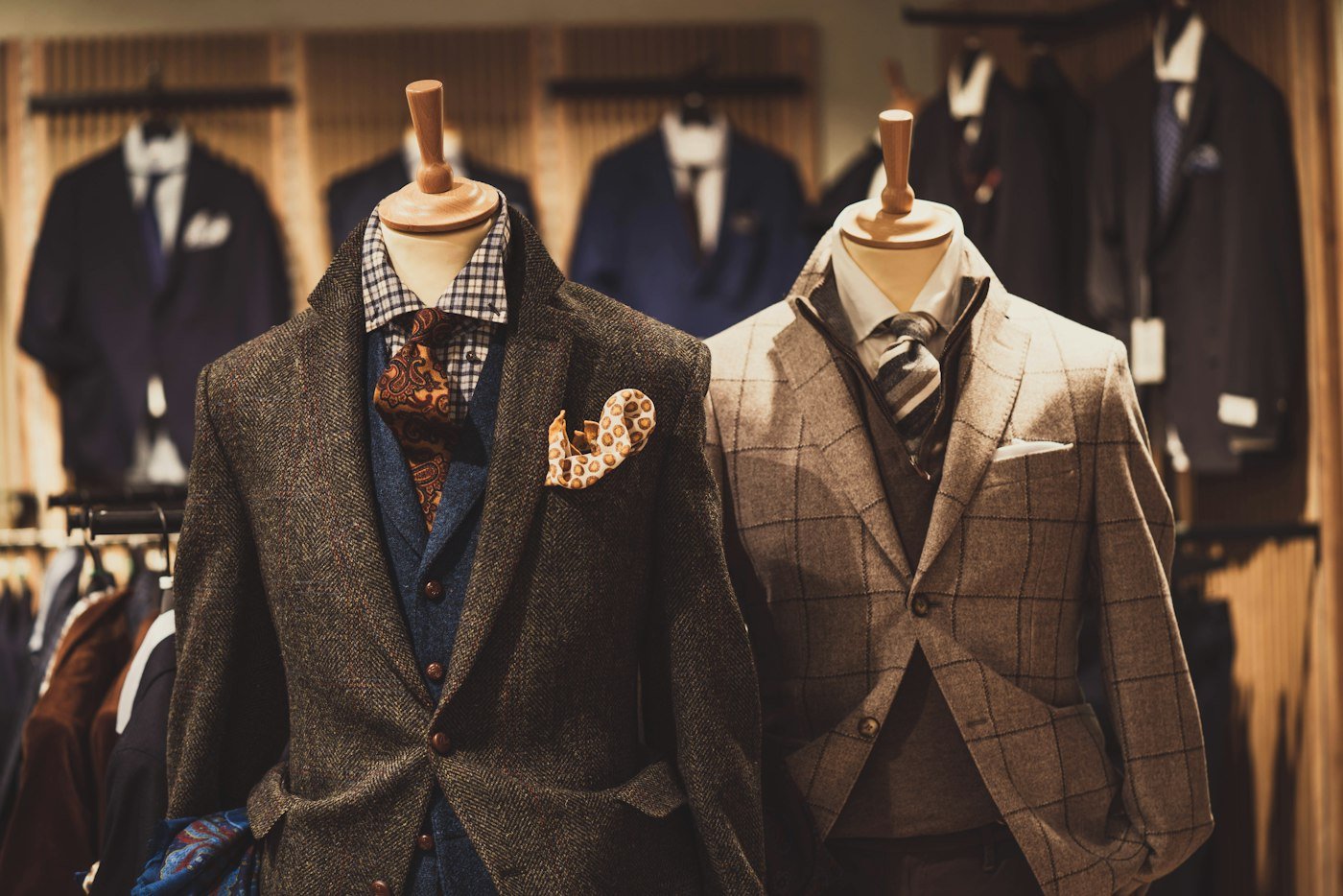
Cloth and fit, brought together
Explore the material and finishing decisions that go into a made to measure suit.
View starting pricesMeasurements are the starting point; the finished look also depends on cloth, proportion and considered detail.
Read the silhouette from top to bottom
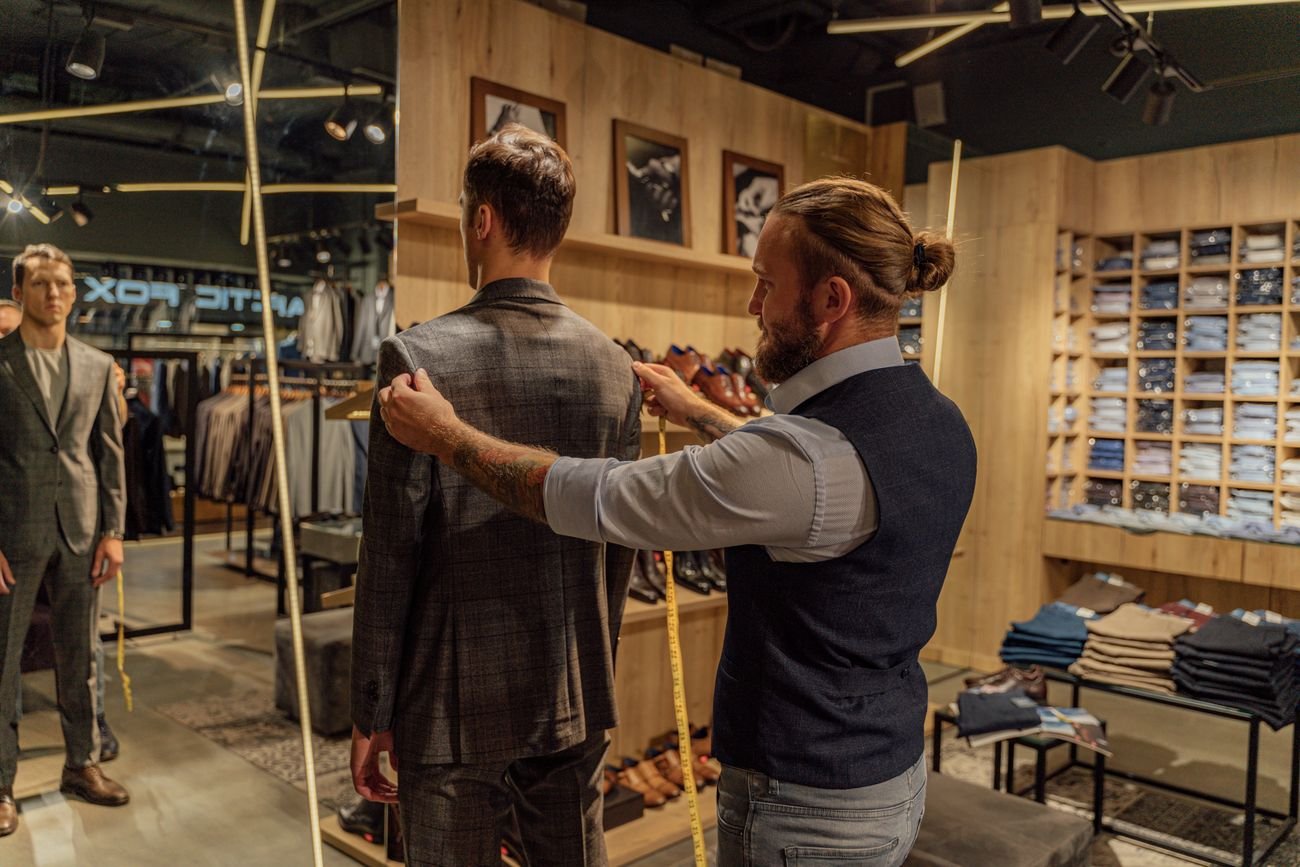
Think about how you like a jacket to sit at the shoulder and waist. Sleeve length, jacket length and trouser rise all have a role in the final proportion. Bring a garment you enjoy wearing as a reference.
Movement matters too. Describe whether you prefer a closer or more relaxed feel and the occasions for which the suit is intended.
Build a cloth shortlist
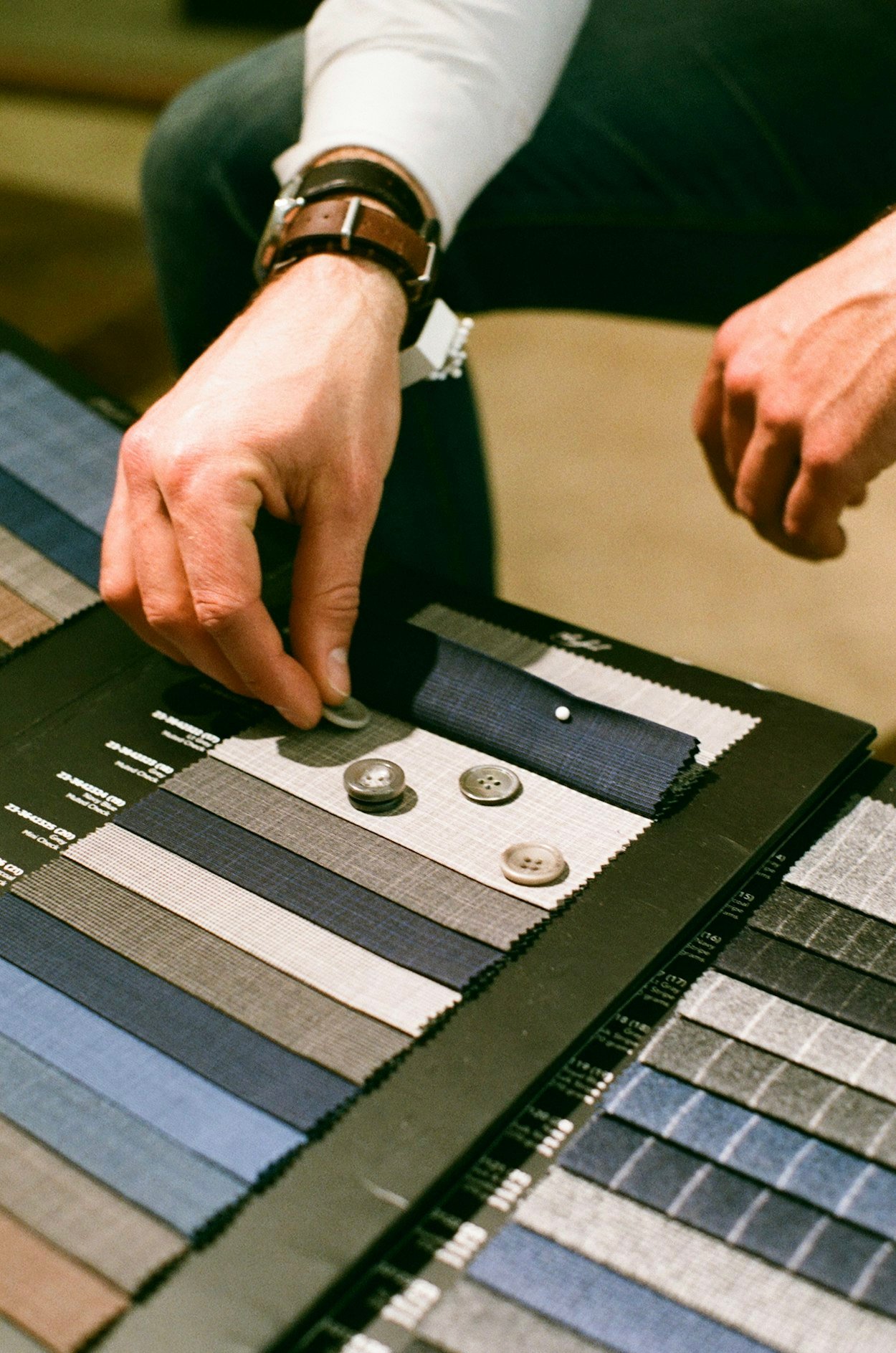
Begin with colours you will actually combine with your shirts and shoes. Navy or charcoal can be adaptable, while texture or a more distinctive shade may suit an individual brief.
Wool choices vary in weight and weave. Inspect the cloth in person where possible and ask about current availability. The fabric guide explains what to look for.
Shape and finish
Available jacket specifications can include half canvas or full canvas construction. Canvas is an internal layer that contributes to the form of the jacket front and lapel. Ask which choices apply to the garment you select.
Lining, lapels, pockets and buttons should work with the fabric instead of competing with it. Custom made suits benefit from thinking about those choices as a whole.
Put the occasion on the calendar
For a wedding or other fixed event, give the intended date when enquiring so the fitting arrangements and completion time can be confirmed. A shirt and shoes chosen for the outfit can provide useful context.
The City of London showroom is near St Paul’s. Price and availability depend on the agreed cloth and garment.
Explore the cloth.
Learn more about tailoring materials and choices.