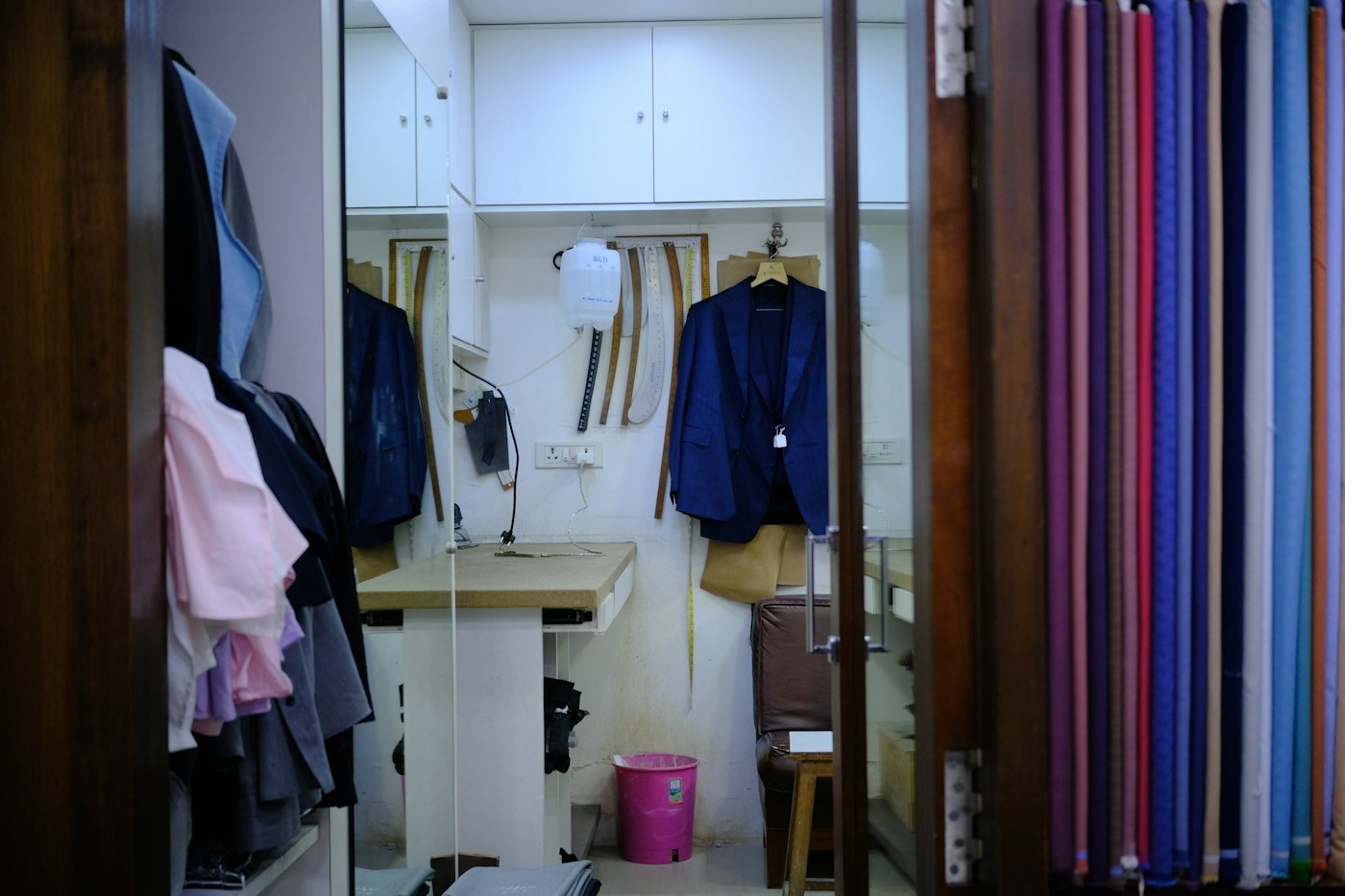
Inside a bespoke suit
A closer look at cloth, jacket structure and the choices that give a suit its character.
View starting pricesA well-composed suit relies on the relationship between material, shape and the way it is worn.
1. Define the garment’s purpose
A wedding suit and a weekday staple may begin with different questions. Consider formality, the climate and whether you want the jacket and trousers to work beyond one event.
In a London tailoring conversation, explain what you reach for already and where you would welcome a change. It is a practical way to frame the cut before choosing the decorative details.
2. Examine the material
Italian and British wool are available in a spectrum of weights, textures and shades. A smooth worsted can look crisp; a textured weave gives a surface more depth. Compare the cloth against the colours and shoes you expect to wear.
Fibre fineness numbers are one piece of information, not a guarantee of suitability for every purpose. Ask about current cloth availability and confirm the exact specification.
3. Understand the canvas
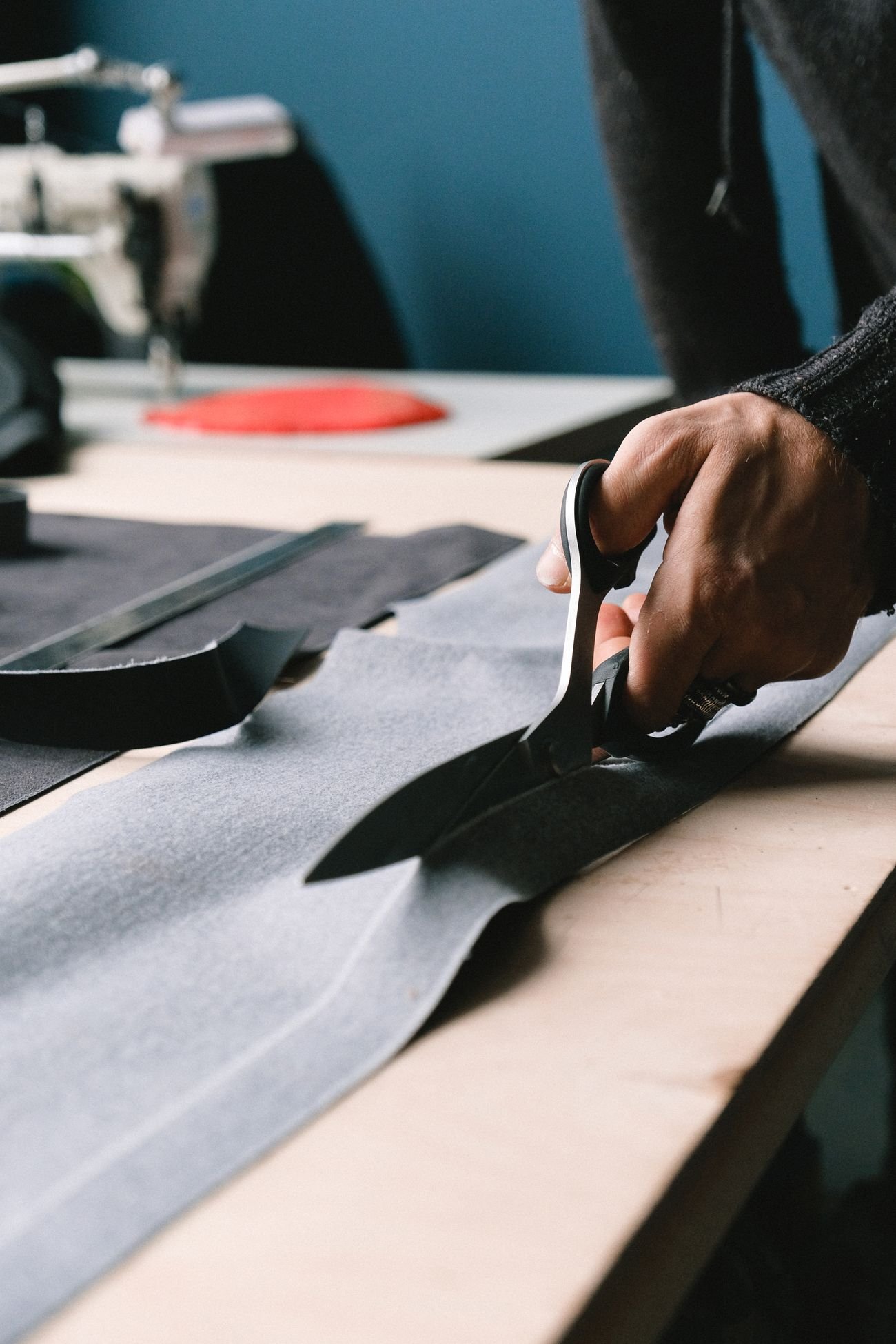
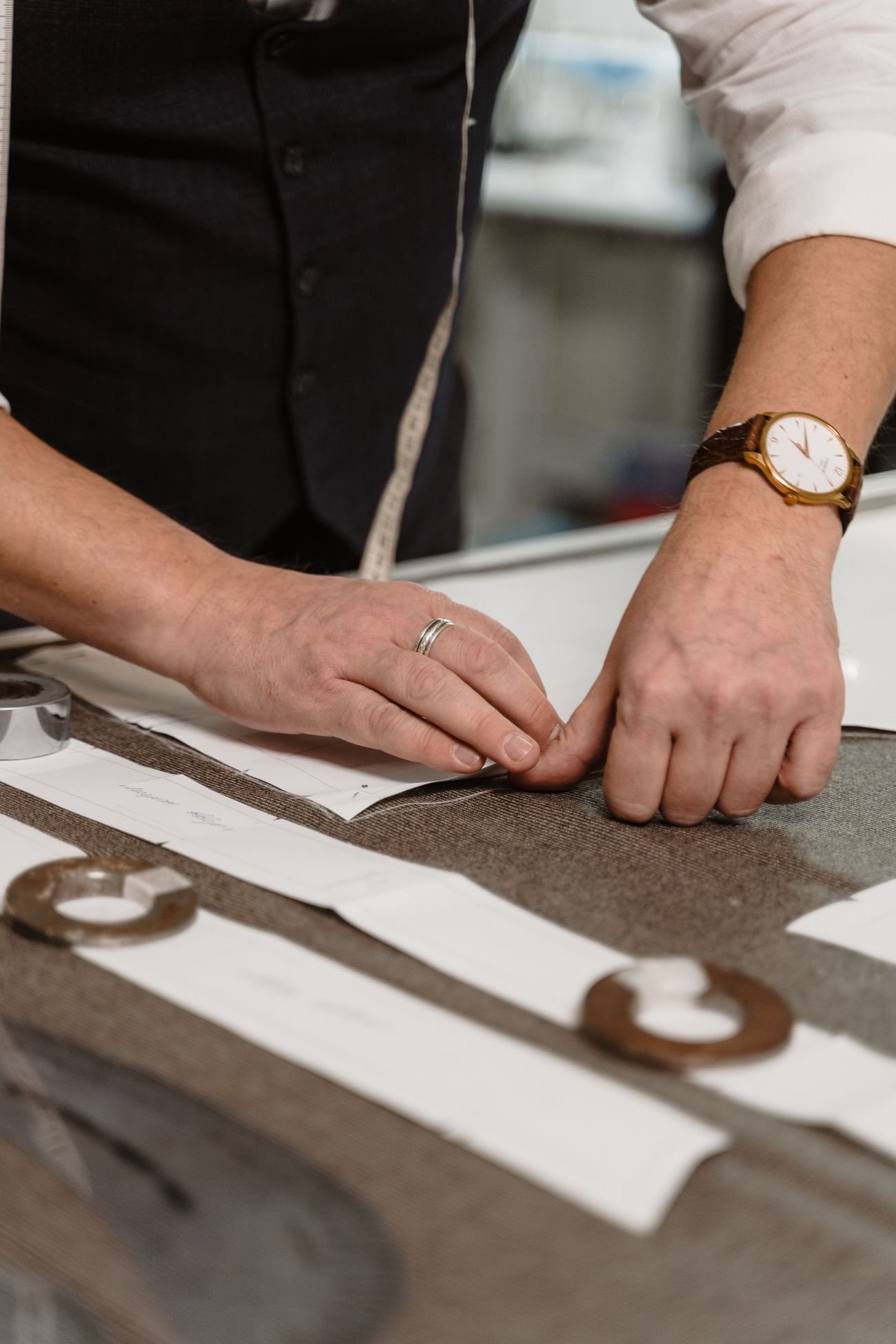
The interlining helps establish the shape of the front. In a full canvas jacket it runs through the front; half canvas uses a canvas layer in the upper front. Which construction is offered depends on the garment.
Look at lapel shape, pockets, buttons and lining as a composition. A detail earns its place when it contributes to the overall look.
4. See the garment as it moves
The fit is experienced while sitting, reaching and walking. Discuss shoulder comfort, sleeve length and trouser position as well as the silhouette you prefer when standing.
Our bespoke price guide gives starting categories. The final quotation and fitting schedule depend on the agreed garment.
Explore the cloth.
Learn more about tailoring materials and choices.